


Agency owners often think sales needs to be flashy, complicated, or carried by charisma. In reality, consistent sales growth comes from having a simple, intentional system that guides prospects through a clear journey. When you skip steps or approach calls without knowing the purpose of each conversation, you leave revenue on the table and make it easier for prospects to compare you solely on price.
A structured sales process does not restrict your style. It protects your time, positions you as a trusted advisor, and gives prospects a reason to feel confident choosing your agency. When clients understand their own pain more clearly, and when they believe you understand that pain even better than they do, you become the obvious choice.
This playbook reflects the same system used by agencies that sign high quality clients consistently. It is straightforward, repeatable, and designed to bring prospects from curiosity to clarity and ultimately a signed agreement without feeling pressured or pushed.
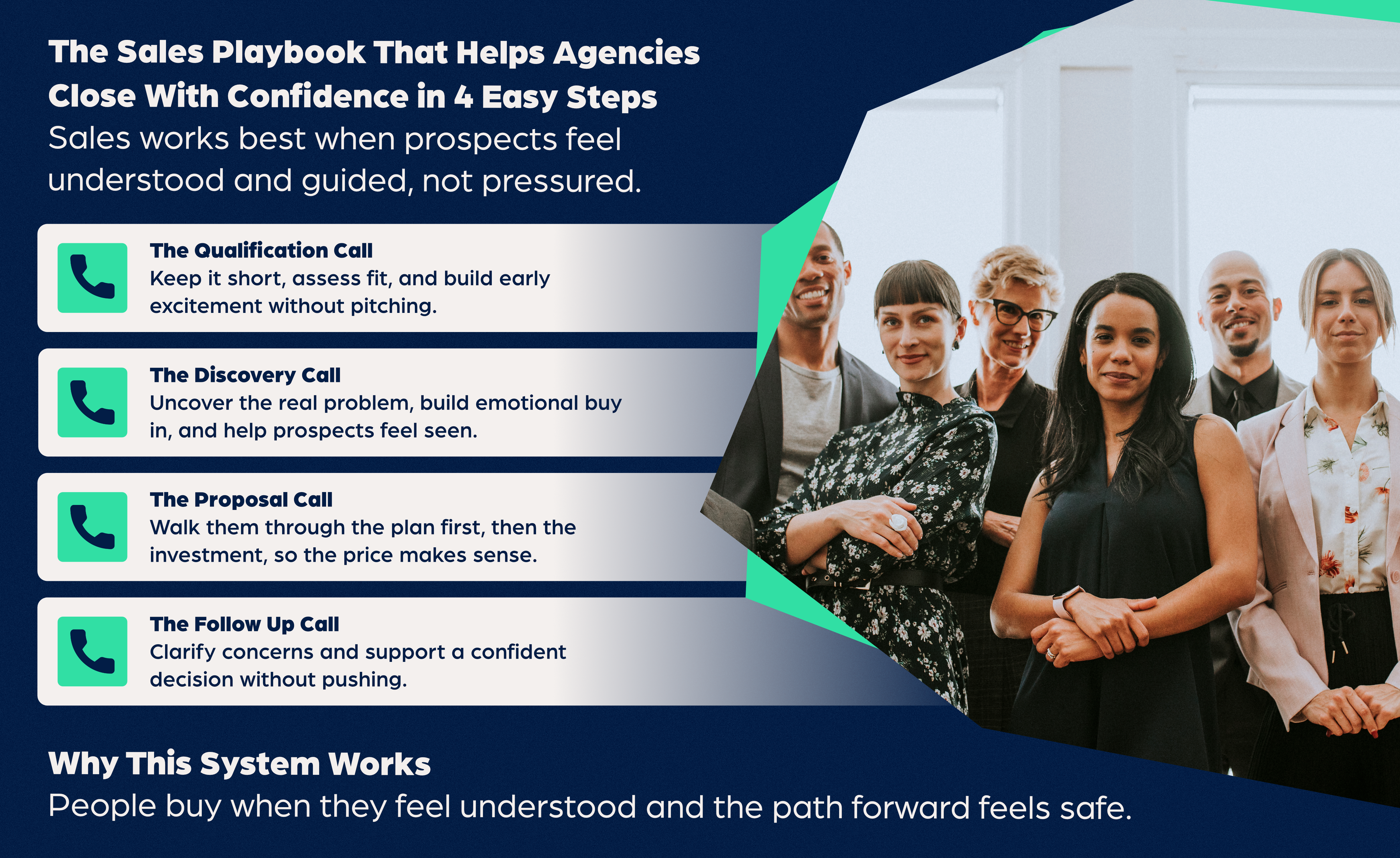
Why Your Sales Process Must Be Intentional
Most agencies lose sales opportunities because the sales experience feels unstructured or because every call feels the same. When prospects cannot identify the purpose of the conversation they are in, they default to treating you like a vendor instead of a strategic partner.
The core problem is usually not the offer, the quality of work, or the price. It is the fact that the prospect is never guided through the stages of trust required to make a confident decision. A successful sales system creates:
- Trust early in the process.
- Clarity about the prospect’s pain and priorities.
- Alignment between their goals and your solution.
- Momentum that carries them through the decision.
- Confidence that they are making the right investment.
Sales stops feeling like selling when your prospect feels understood. That is what this playbook builds.
The Qualification Call: Excitement, Fit, and Momentum
The qualification call is the most overlooked step, yet it determines the success of everything that comes after it. The purpose is not to pitch. It is not to prove anything. It is to decide whether the relationship is even worth exploring and to begin building excitement about the possibility of working together.
Your goals during this call include:
- Gauging fit
- Creating early trust
- Collecting essential information about the prospect
- Understanding why they reached out now
- Identifying what is not working today
- Confirming they have a real problem and real intent
- Getting them excited about the next step
This call should be short. Think of it as the first few minutes of meeting someone at a networking event. You are not asking for a proposal review thirty seconds in. You are simply figuring out whether it is worth having lunch next week.
What not to do on this call:
- Do not start pitching
- Do not over explain your services
- Do not walk through your process
- Do not answer the question “how will you help us” with a full explanation
- Do not try to convince them of anything
- Do not talk more than you listen
Prospects will sometimes try to take control and turn this call into an interview. When they ask things like “Tell me how you help companies like us,” you do not want to start listing your services. Instead, redirect gracefully with:
“Happy to explain. First, I want to make sure I understand your situation so that anything I share is relevant. Can you tell me what prompted you to reach out now?”
This puts you back in the driver’s seat. A successful qualification call ends with the prospect feeling like:
- You understand their world
- You ask intelligent questions
- You know what you are doing
- They want to keep talking
And most importantly: they walk away looking forward to the discovery call.
The Discovery Call: Emotional Buy In and True Understanding
The discovery call is where real trust is built. The purpose is not to impress the prospect with how smart you are. It is to help them articulate what they feel, what they want, and why their past attempts have not worked.
During this call, your goals include:
- Helping them feel seen and heard
- Understanding the emotional weight of their challenge
- Uncovering what they have tried already
- Learning what has failed and why
- Identifying the deeper problem behind the surface problem
- Clarifying what a meaningful outcome looks like to them
- Building confidence that you understand the problem better than anyone they have spoken to
This is also the conversation that makes them think:
“I really hope I can afford this agency.”
When a prospect feels understood at a deeper level, they assume you know how to solve the problem.
You also want to begin weaving in stories that help them believe results are possible. This does not mean pitching. It means sharing relevant experiences through third party storytelling so prospects can see themselves in the narrative.
Stories should cover:
- Where a past client started
- What they were struggling with
- The challenges beneath the surface
- What made the difference
- What the outcome was
- How they felt afterwards
This gives your prospect proof of possibility and proof of capability without you having to boast or convince.
When done correctly, your prospect ends this call emotionally committed to you. All that remains is for them to rationalize the investment.
The Proposal Call: Rationalizing Their Emotional Decision
Most agencies undermine their own sales by emailing proposals instead of walking through them live. Sending a proposal without a conversation removes momentum and strips away context. It is the quickest path to being ignored, misunderstood, or ghosted.
Think of the proposal call as connecting all the dots you uncovered during the discovery call. You are not trying to sell. You are reaffirming the decision they already made emotionally.
On this call, you want to:
- Walk them through the problem as they described it
- Clearly restate their goals and desired outcomes
- Articulate the obstacles in their way connect your proposed plan directly to their goals
- Explain how the plan solves the challenges they cannot solve alone
- Demonstrate why your process gives them a clear path forward
- Validate the feelings that motivated them to seek change
- Review timelines and expectations
- Present the investment once they already feel aligned with the plan
The prospect should first buy into the plan, then the approach, then the investment. The price should never come first.
During this conversation, use visual aids or a simple set of slides to make the process concrete. Prospects learn visually, and visuals add clarity and confidence.
Before ending the call, address next steps clearly:
- Confirm whether they are leaning yes or no
- Ask what questions they still need answered
- Identify any internal approvals or stakeholders
- Get agreement on a timeline for a final decision
The goal is never pressure. The goal is clarity.
The Follow Up Call: Clarity, Momentum, and Closing the Loop
If your prospect does not commit on the proposal call, the follow up call becomes the place to answer lingering questions and clear remaining concerns. This call is not about convincing. It is about supporting a confident decision.
The purpose is to:
- Bring clarity where confusion exists
- Explore hesitations without judgment
- Reaffirm goals and desired outcomes
- Adjust the plan if needed
- Guide them toward a confident yes or a respectful no
Many agency owners accidentally create pressure during this stage because they want the sale. Pressure causes prospects to retreat and delays decisions further. Instead, stay calm, curious, and confident.
If the answer ends up being no, keep the door open. A no today frequently becomes a yes later, especially if the prospect tried to solve the problem themselves and failed.
Continue nurturing the relationship through:
- Timely check ins
- Relevant insights
- Periodic updates
- Genuine interest in their progress
Because when the pain resurfaces, you will be the first person they think of.
What Makes This System So Effective
This playbook works because it follows the natural way humans make decisions. People do not buy when they are convinced. They buy when they feel understood and when the path forward feels clear and achievable.
This system helps your prospects:
- Understand their own challenges more clearly
- Believe their goals are possible
- Trust that you are the right partner
- See the logic behind the investment
- Feel confident taking action
And it helps you:
- Avoid being compared solely on price
- Create consistent sales conversations
- Identify poor fit leads early
- Shorten the sales cycle
- Win better clients who stay longer
When your sales process is predictable, you remove guesswork, reduce anxiety, and increase conversions.
Bringing This Into Your Agency
If your sales process feels inconsistent, unpredictable, or stressful, consider simplifying. A strong sales system does not require pressure or persuasion. It requires intention, structure, and clarity.
Begin implementing this playbook by focusing on:
- Creating excitement and early trust in the qualification call
- Earning emotional buy in during the discovery call
- Rationalizing the decision with a plan based on their words during the proposal call
- Supporting a clear decision during the follow up
With repetition, you will start to understand patterns in behavior, objections, hesitations, motivations, and triggers. This makes every call easier and every prospect more confident in your ability to guide them.
When you show up as an advisor instead of a vendor, prospects do not just want your services. They want your leadership.