


If you have ever sat waiting for a client’s approval, watching deadlines slip by and profit margins shrink, you are not alone. Every creative agency eventually runs into this problem. The designs are beautiful, the strategy is sound, the client loves your team, yet somehow, the project stalls because feedback lingers in limbo.
You follow up once. Then again. Then you send a “gentle reminder.” Before you know it, your team is idle, your schedule is off, and your profit target is shrinking. Chasing approvals feels like part of the job, but it shouldn’t be. The problem is not your client. It is the system.
What if there were a way to create a process that keeps projects flowing without frustration? What if you could eliminate vague feedback, missed deadlines, and endless revision cycles while strengthening client trust at the same time?
Successful agencies already do this, and the method is simpler than you might think. It starts with how you frame the approval process and how you guide your clients through it.
This is how to design an approval system that works for both you and your clients.
The Real Reason Approvals Slow You Down
Many agency owners assume slow approvals are a client problem. In reality, it is often a clarity problem.
When clients are given too many options, too little guidance, or too vague a request, they freeze. They feel anxious about making the wrong decision, or they do not know how to give feedback that feels valuable. The result is silence, indecision, and confusion that trickles down into your team’s schedule and profitability.
The truth is that your clients are not creative experts. They hired you to be. If you leave too much of the decision-making to them, you create a bottleneck. Both sides end up frustrated.
You can fix this by leading the process with structure, context, and confidence.
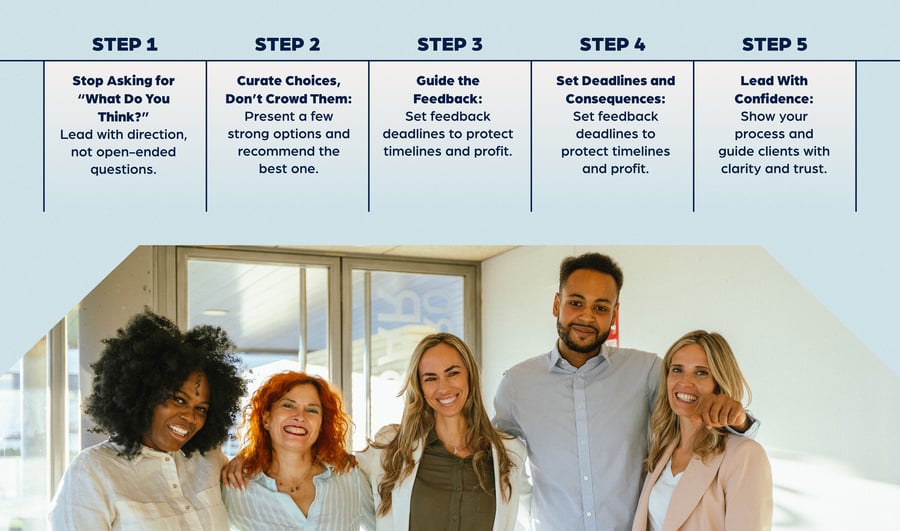
Stop Asking for Open-Ended Feedback
One of the fastest ways to delay a project is to ask, “What do you think?” or “Do you like it?” Those questions are well-intentioned but dangerously open-ended. They push clients into creative territory that they are not equipped to navigate.
When you ask those questions, you are really asking for subjective opinions rather than strategic feedback. The result is usually a list of surface-level notes that lead to more revisions and less clarity.
A better approach is to give your client the right lens through which to view your work. If you are presenting a design concept, explain what phase of the project it represents, what problems it solves, and what decisions have already been made. Then tell them exactly what kind of feedback you need.
For example, you might say:
- “At this stage, we are focused on ensuring the visual direction aligns with your brand positioning.”
- “We are not refining copy or spacing yet. Please focus only on whether the tone and visual hierarchy feel consistent with your audience.”
By narrowing their focus, you help clients evaluate your work strategically rather than emotionally. That clarity shortens approval cycles and builds confidence in your leadership.
Curate Choices and Lead With a Recommendation
Another major reason approvals stall is because clients are given too many choices. It might feel helpful to show every possible variation, but it usually has the opposite effect.
Clients often experience decision fatigue when faced with multiple creative options. Instead of speeding up the process, it overwhelms them and makes them doubt their own instincts.
You can avoid this by curating your recommendations. Present no more than three viable options and clearly identify which one you believe is the strongest. Explain your reasoning and how this choice ties back to their goals.
Give context for every decision you made. Remind them what stage of the project you are in, what objectives you are prioritizing, and what considerations guided your creative direction. Share why you ruled out other approaches.
This approach reframes the conversation from “Which of these do you like?” to “Here is the best direction to achieve your goal, and here is why.” Clients appreciate that clarity because it removes guesswork. It also positions you as the expert you truly are.
Confidence is contagious. When you show conviction in your recommendations, clients feel safe following your lead.
Build a Framework for Feedback
Even with curated choices, clients need structure when sharing input. Without it, you end up with subjective, inconsistent feedback that causes more confusion.
Create a system for how and when clients should respond. If possible, use a centralized feedback tool or a simple structured email format. The goal is to guide their thinking, not just collect comments.
Here is what structured feedback might look like:
Context Reminder
“Here is the objective of this project phase. We are validating direction, not finalizing details.”
Guided Prompts
- Does this direction reflect your brand’s voice and tone?
- Does it highlight the features or emotions most important to your target audience?
- Does it align with what we discussed in your strategy?
Action and Deadline
“Please share your feedback by Tuesday so we can begin the next phase without delaying the launch timeline.”
By setting expectations like this, you make it easy for clients to give you the right information. You eliminate ambiguity and demonstrate that your process is built around their success.
This type of leadership not only reduces revisions but also increases perceived value. Clients see that you are running a professional operation, not reacting to scattered feedback.
Set Clear Deadlines and Real Consequences
A feedback deadline is not a suggestion; it is a boundary that keeps the entire project on track. When approvals are late, timelines slip and your profit margins take the hit.
Be upfront about deadlines and what they mean. For example, you can say:
“If we do not receive feedback by Friday, the project timeline will shift by one week and the final delivery date will change accordingly.”
This is not about being rigid or punitive. It is about setting professional expectations and protecting both sides from frustration.
You can even build these expectations into your contracts or project scopes. Include language that outlines how delayed approvals affect milestones or costs. Transparency early on prevents difficult conversations later.
Most clients will respect these boundaries once they understand how feedback delays impact the project. What matters is that you communicate clearly, early, and consistently.
Lead With Expertise and Empathy
The approval process is not only a procedural step. It is a trust-building opportunity. Each time you guide a client through feedback, you are demonstrating your expertise and leadership.
When clients feel that you have a structured, thoughtful process, they relax. They stop micromanaging and start trusting your judgment. That trust compounds over time, turning a single project into a long-term relationship.
Think about how many creative professionals you have admired for their calm authority. They do not rush to please every opinion. They listen, explain their reasoning, and help clients see the bigger picture. That is the kind of presence you want to bring to every approval phase.
Clients crave guidance more than perfection. They want to feel that you are leading them toward the right outcome, even when they are unsure of what that looks like. The more you guide them with empathy and clarity, the more confident they become in your partnership.
The Shift From Bottlenecks to Momentum
Streamlining your approval process is about more than just moving projects faster. It is about transforming how clients experience working with your agency.
When your process is built on structure, clarity, and empathy, everything changes. Clients know exactly what is expected of them. Your team knows exactly when to move forward. Projects stay on schedule, and profitability increases naturally.
This shift also changes how your clients perceive your agency. Instead of viewing you as a service provider waiting for their direction, they see you as a strategic partner guiding them toward success. That change in perception leads to better communication, smoother collaboration, and stronger retention.
Your creative expertise is valuable, but it is your systems that make that expertise sustainable. By refining your approval process, you create a foundation for sustainable growth.
This is how agencies stop chasing clients for feedback and start leading them with confidence. It is how you reclaim your time, protect your profit, and deliver exceptional results without sacrificing your sanity.
When you bring structure to the approval process, you are not just improving operations. You are creating a client experience built on trust, clarity, and respect. And that is what keeps both projects and relationships moving forward.